UN agency hampers AIDS fight: Stephen Lewis
Feb 27, 2007 03:18 PM
Michelle Nichols
Reuters
UNITED NATIONS – The U.N. drug control watchdog is hindering efforts to fight the global AIDS pandemic and the agency should be independently reviewed, human rights groups and a former U.N. AIDS envoy said Tuesday.
The Canadian HIV/AIDS Legal Network, the Open Society Institute and Stephen Lewis, a former U.N. special envoy for AIDS in Africa, accused the 13-member International Narcotics Control Board of enforcing drug policies that ignore public health.
"If I had it in my grasp I would take them out behind the international woodshed and give them an intellectual and rhetorical flogging, the like of which they would never forget," Lewis told a news conference.
A report by the groups said one third of HIV infections outside of Africa were caused by injection drug use and while the U.N. board acknowledged drug use was accelerating the spread of the disease in some countries, it failed to encourage any preventive action.
The report, "Closed to Reason," said the International Narcotics Control Board, established in 1968, had not only ignored the public health implications of drug use, but discredited "effective programs" such as sterile syringe exchanges and the use of methadone as an addiction treatment.
"It's as though the HIV/AIDS conjunction has passed the International Narcotics Control Board right by," Lewis said. "They are aligning themselves with the virus rather than opposing it determinedly."
Lewis, a Canadian, also told of how while he was former U.N. Secretary-General Kofi Annan's special envoy on AIDS in Africa between 2001 and 2006, he voiced support for safe drug injection rooms.
He said the control board complained to Annan about his comments. "The fact that they would write a letter attempting to silence a critic is a demonstration of how out of control the International Narcotics Control Board is," Lewis said.
The Vienna-based International Narcotics Control Board (INCB) is an independent judicial body elected by U.N. members that monitors the implementation of international drug control conventions. A spokesman was not available for comment.
Nearly 40 million adults and children in 2006 lived with HIV, the virus that causes AIDS, with more than 25 million in Africa alone, U.N. figures show.
"Millions at risk of HIV in Eastern Europe and Asia can benefit from drug policy that works in tandem with public health," said Daniel Wolfe, deputy director of the Open Society Institute's international harm reduction development program.
"Alleviation of human suffering is one portion of the international conventions that the INCB has done strikingly little to uphold," he said.
Showing posts with label I had a farm in Africa..... Show all posts
Showing posts with label I had a farm in Africa..... Show all posts
Tuesday, February 27, 2007


Friday, November 10, 2006
Apologies
I decided that the most convenient way of doing my Africa blogs would be bit by bit, so it's a work in progress at the moment, you can ignore all the numbered posts and look down the page at my last completed post 'Greetings from Africa" or above at my post about South Dakota.
Africa - Day 11
On our last day we got up super early and headed out to the market before picking up our finished clothes at the tailors. In the market, 2 different merchants tried to sell me ivory. I wasn't shocked really, but I was upset. They tried to tell me that it was old ivory and that old ivory is ok to buy and bring home - that's the biggest line of bullshit anyone has ever tried to feed me in my whole life. The wackiest part was that after I chastized these merchants for selling ivory, they tried to show me their other wares. I explained very pointedly that my market dollar would be going into the pocket of a merchant who wasn't selling ivory. I'm obviously wasting time trying to educate people about CITES in Toronto, next trip I'm taking a wad of them with me.
We headed to Zac's and picked up our clothes, he was cutting button holes and snipping threads as we were walking in. We all wrote down our addresses in case he ever visited Toronto. Then after we were done, Ash pointed out that Zac only speaks French and Ash only speaks English, yet for some reason she put her phone number down. This led Zac to do a hilarious impression of him and Ash talking on the phone.
We booted it back to the hotel and dragged our luggage out and hoped in a cab to the border, which is literally the edge of Lome, 5 minutes with no traffic. As we pulled into the border area people were running beside the moving car trying to negotiate carrying our bags on our heads for us as we crossed the border. Now, with all my extra purchases I had added an extra bag, and had considered getting a porter to help me over the border, but the throng was just too intimidating. When we got out of the cab, there was at least 15 people clamouring to get in the trunk. Dan and I both announced that we wouldn't be using any porters.
We booted it back to the hotel and dragged our luggage out and hoped in a cab to the border, which is literally the edge of Lome, 5 minutes with no traffic. As we pulled into the border area people were running beside the moving car trying to negotiate carrying our bags on our heads for us as we crossed the border. Now, with all my extra purchases I had added an extra bag, and had considered getting a porter to help me over the border, but the throng was just too intimidating. When we got out of the cab, there was at least 15 people clamouring to get in the trunk. Dan and I both announced that we wouldn't be using any porters.
Then suddenly the trunk was opening and 30 hands were grabbing our bags and pulling them in every direction. I managed to grab ound of my bags off someone and put it over my arm, but there were 3 or 4 people fighting over my other bag, and in the melee all I could see was it heading away from me. So I pushed and shoved my way to the bag, and started screaming at the people and pushing and pulling it to try to loosen their grips. As I ran for the border, people were chasing me and pulling at it. I yelled at them in French to leave me alone and as I was getting away from them I heard them mocking me repeating what I'd said in a high pitched voice.
If that had been Europe, it probably would have all been some kind of elaborate diversion for a pickpocketing, but it wasn't that. I'd say it was just incredibly agressive business practices. But it wasn't a very pleasant goodbye to Togo. When we crossed into Ghana, all the Ghanian border staff were so friendly, and one of them even came up while we were buying some water and paid for ours while he was buying some for himself. We all agreed that we loved Ghana the best.
The cab from Aflao was uneventful until the end when Dan offered to give the driver directions to our destination and the driver said he knew where he was going, then, drove us all over Accra. We finally insisted that he take us where we asked and gave him directions. Then he tried to convince us that we should pay for his extra gas. Typical. We didn't fall for it.We left our stuff at J's and went shopping. Ate at Country Kitchen again, that place is so good. This time I had my Red Red (cooked plantains and sauce) with beans and Palava sauce. The restaurant was full of well dressed swanky Ghanians, we felt a bit like jerks being in there all sweaty and wearing jeans, but kicker was Ashley's behaviour when a spider landed in her hair. Ash hates spiders, hates them. So this big black and white one was in her hair and Dan pointed it out. She started squealing and jumping up and down and made a big scene. I'm sure all the swanky locals were pleased we were there. But it was too funny not to enjoy the moment.
We did a last round of shopping and then we headed to the airport, which only has two gates as far as I can tell, but yet, it's still as confusing as a rat maze.
We stopped in Lagos again on the way back, while we were fuelling, it started to rain. The rain got really bad, and there was thunder and lightening. Ash hates lightening. She's not too fond of taking off and landing in planes either. Usually Dan and I are pretty calm fliers, but this take off was pretty hairy even for us. After a while the pilot taxied out to the runway and went up and down a few times, testing brakes and traction. When he decided it was safe to go, we were right at the end of the tarmac when we finally left the ground and the plane had to ascend at a really deep angle. Knowing that those airports only have visual air traffic control doesn't lend much confidence to the situation in my mind.
We hung out in McDonalds the whole morning in Frankfurt while connecting. I went out of the transit area so I could get a stamp in my passport, the stamp sucked and the lady at the security took my anti-itch cream off me on the way back because it was 118ml instead of 100ml - I hope that lady gets mosquito bites all over her body one day and I'm there to take away her anti-itch cream. Boo-urns!
Africa - Day 10
We woke up at K's, and she made us her famous pancakes. When K and I lived together she would make me pancakes sometimes. They were so tasty, so tasty I could overlook her insistence that Vermont maple syrup is better than Canadian. Obviously, K was working with totally different ingredients, but those were still some tasty pancakes.
After breakfast we packed up our clothes and sat around in K's sweet crib. Later on we headed out to K's friend P's village half an hour outside of her small town, and truly out in the bush. More animated negotiations at the gare. Ashley met a little friend who just stared at her instead of smiling or talking. Once we finally got going with our driver we realized why shocks are important on bumpy roads, I thought the car would fall apart. When we got there, the driver insisted on taking us right to the door even though there were no roads, he got directions from someone on the side of the road to the 'Yovo's' house. As we were driving up to a hut, we spotted a white guy walking out to greet the car. Ash said, "Do you think that's P?" We all said, no Ash, that's the other big white guy who lives in this tiny village in the middle of the west African wilderness!"
P's host family had made us a big lunch of fufu, and groundnut soup (special request for me) and they even killed a chicken for the occasion. It was soooo good. After lunch we went for a walk around the village. P said K had called ahead and given him our list of requests for the afternoon. So he said, "Which one of you was the one who wanted to pound fufu? Which one wanted to carry stuff on their head? And which one wants a baby tied to their back?" I suppose it would be natural since there were 3 requests that each of us would want to do one, but in actuality I was the one who wanted to do all three. I sheepishly admitted as much, and we all set out looking for a baby who had parents with a sense of humour, who was big enough not to pee down my back, but young enough that they wouldn't be upset by being affixed to a strange back.
The kids in the village were so much fun. They came out of the woodwork pretty quickly as we started walking around. It was the mid-day school break for them, so there were plenty around. P showed us the tree in the centre of the village that you have to climb if you want any kind of cell reception, and introduced us to the village notables, and took us by the area where the animists of the village practice what North Americans would call voodoo.
The baby carrying was hilarious, I was so afraid that the baby would fall off. I still can't figure out how they keep the carrying cloth secured. P, who is a big tall guy, was trying to help and started trying to tie the cloth over my chest, which all the women thought was absolutely hilarious. They don't really have any breast hang-ups there, I think it must have been the idea of a guy trying to help out with something that is very exclusively in the domain of women there. You'd never see a guy carrying a baby around on his back, he might hold the baby, but not tied that way. I should have tried to get them to put the baby on Dan or P and take pictures of their reaction, but we were running short of time, so we said our goodbyes and headed back out in the with our driver and the shockless wonder.
For the home stretch back to Lome and then Accra and our flight home we flew solo, leaving K at her place.
By the time we got back to the tailor in Lome for our fittings, I was so sweaty that putting the new clothes on was like trying to get into a wet bathing suit.
Africa - Day 9
-Dan and I go to Ouidah
-Travel to Tsevie
-Dark road cab ride from Grand Popo to K's village
-Sleep at K's
-Travel to Tsevie
-Dark road cab ride from Grand Popo to K's village
-Sleep at K's
Africa - Day 8
We woke up in Lome and headed towards Benin, stopping in Aneho on the way. Aneho was the German capital of before they lost it in the war. When we got out of our taxi in Aneho, no one could understand why we wouldn't take 'motos' - motorcycle taxis - where we wanted to go. When I told them I was scared and it wasn't safe, they laughed at me like I was kidding them.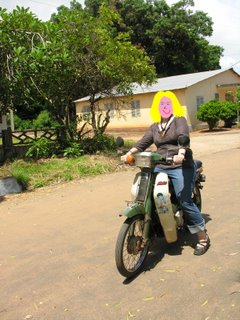

It turned out that Aneho didn't have all that much left of the German capital, or else we couldn't find it, and we had a long sweaty walk with all our bags. But I did get this fabulous picture of myself on a moto borrowed from some guy driving by, and no I don't actually look like that, I'm just a little shy.
After Aneho, we headed for Benin, K warned us before we got to there that the officials at the Beninese border are incompetant and rude - a lovely combination.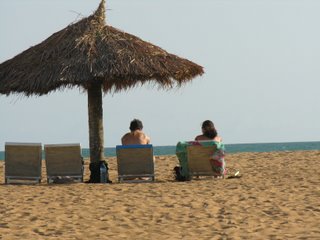
After Aneho, we headed for Benin, K warned us before we got to there that the officials at the Beninese border are incompetant and rude - a lovely combination.
Once we crossed the border, we took a cab from the other side to Awale Plage near Grand Popo. A lovely beach resort. Being sick I had decided to be vigilant about eating only safe stuff. Also, by the time we got to the resort we'd been on the road for many hours with nothing to eat and I was starving and had low blood sugar. So I scoured the menu for something really safe to eat. I settled on breaded shrimp and fries, nothing there would be raw. Then when the food arrived and it was drowning in a garnish of wet lettuce. I sent it back and the waitress put the same shrimp on a new plate without the lettuce. I don't think she grasped the idea that I was concerned about parasites and bacteria and not just some big picky bitch. I was frustrated... but instead of just being miffed and moving on, I started crying. How embarrassing. I drag everyone on a third world vacation and then I end up being th one who cracks up. It was just low blood sugar, and lack of sleep, and being sick, but I think I ruined everyone's lunch. Here's a picture of Dan trying to cheer me up - no wonder I couldn't stop crying!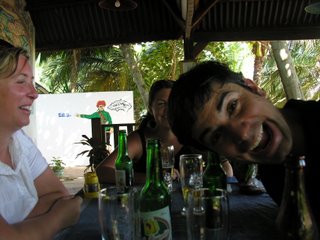
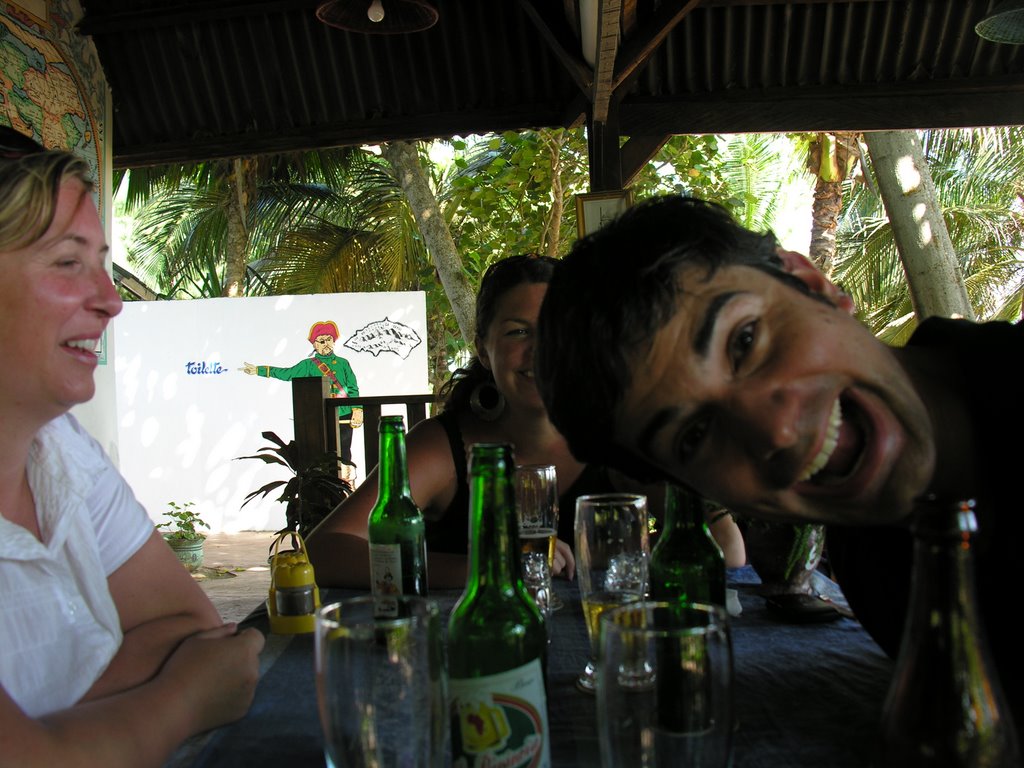
I felt bad about it, but, I cried in Bangladesh every time we took the train, so escaping this trip with only one crying jag was pretty good.
At dinner when we preordered our dinner with long explanations about not contaminating my food with their infernal lettuce, it came drowning in lettuce again, then after I sent it back, it came back again on a new plate, with bits of lettuce still stuck to the bottom of it. I handled it better the second time around.
Who could really be angry for too long staying on a beach like this though?
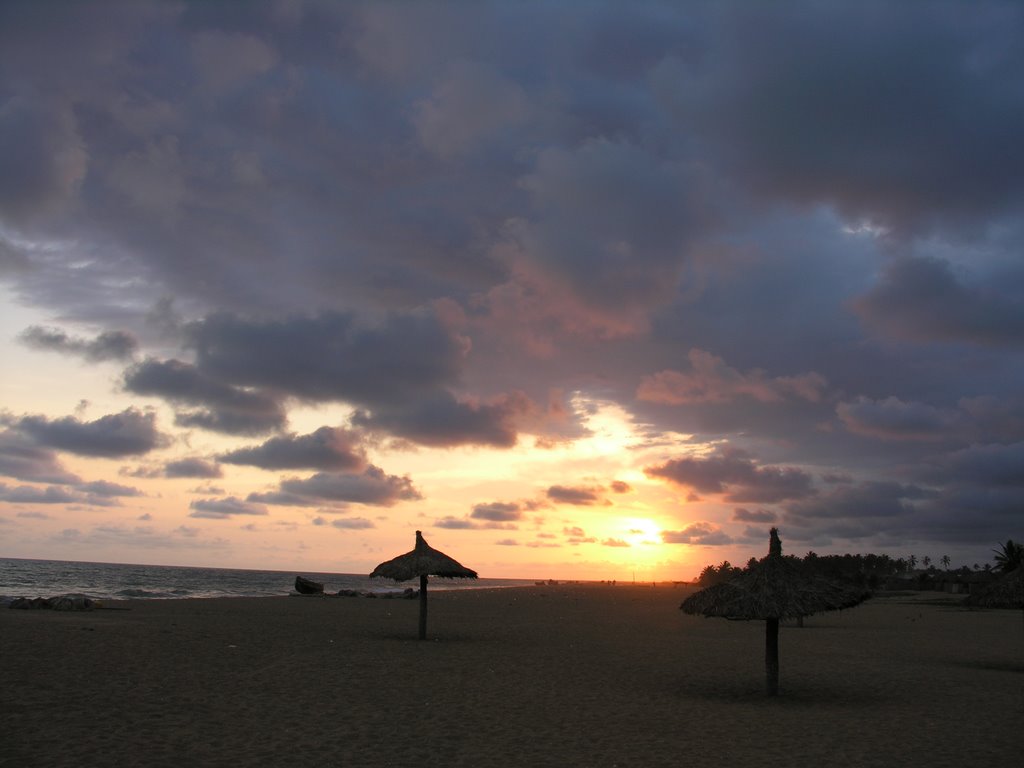
Africa - Day 7
We had a really eventful day, I woke up with the runs, after having dreams all night that my belly was expanding. K took us over to see her tailor. Zac is amazing he's talented, cute, funny... Love that guy. After each of us told Zac what we wanted made, he took us to the market to pick fabrics. Telling him what we wanted made was almost like sitting on Santa's lap.
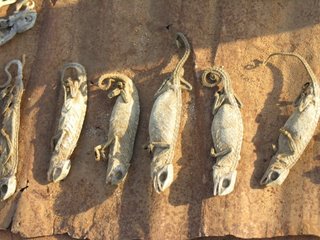 Camelions
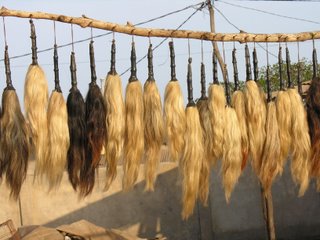
Whisks made out of the tails of I'm not sure what.
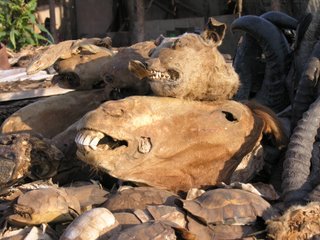
A horse head, among other things.
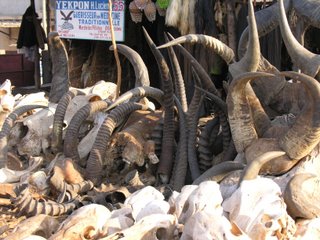
More horns than you could shake a horn at.
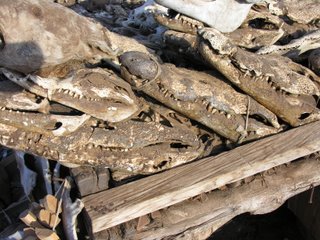
An assortment of Crocodillians, including a Gavial.
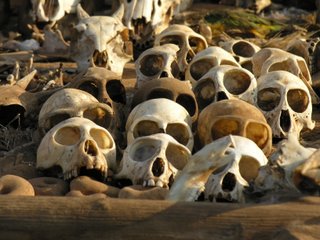
Assorted Primate skulls.
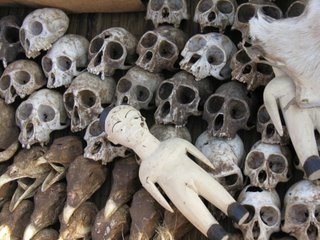
Primate skulls. and bird skulls with a fetish statue.
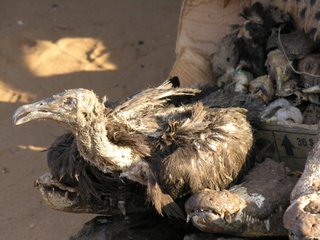
And a partridge in a pear tree! Or it's fetish market equivalent ... a dried out vulture.
That night we went out with some of K's peeps. We had a lovely pizza and some very large beers. I, very innapropriately, took the belly beads from the market guy out of my purse and showed everyone.
We did so much shopping that we decided to take a lunch break in the middle. Of course sitting in an open cafe in the market meant that we were sitting ducks for all the people walking around selling stuff. In some cases they were really aggressive and just stayed there, in other cases , I think, they stayed because they wanted to stare at us. The end result was a none too pleasant meal. Ash tried the bathroom, and that was super sketch. And I got some particular attention from one of the market's vendors who wanted more from me than my patronage at his shop. He saw us coming in to the market and tracked us down. He came and pulled up a chair and sat next to me. He just wouldn't let up. He stayed and stayed, then he left and came back with belly beads - a string of beads that go around you middle under your clothes. Considered very sexy, like giving someone lingerie. I had no idea whether it would get rid of the guy faster to take them or not take them, but in retrospect, I don't think I'd have gotten away from him quickly either way.
After lunch we split up and shopped separately in the market. When we met back up, it seems that my market lover had found Dan and Ashley while Katie and I made our getaway, but that he'd stayed with them, quietly singing to himself about me. Ugh...
So we got the hell out of there, and took one of K's friends with us to the 'Fetish Market' in Lome. My BF's dad and partner recommended this highly. In retrospect, I probably should have been more skepitcal of their recommendations, because, I love them, but they are a pair of sadistic bastards. Who would send you somewhere absolutely gruesome, just to see the look on your face. Afterwards I sent them a postcard, saying as much. The BF's dad once had a Christmas time competition with is kids to see who could find the most disgusting canned food.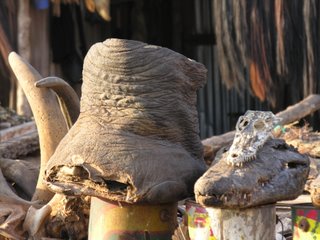
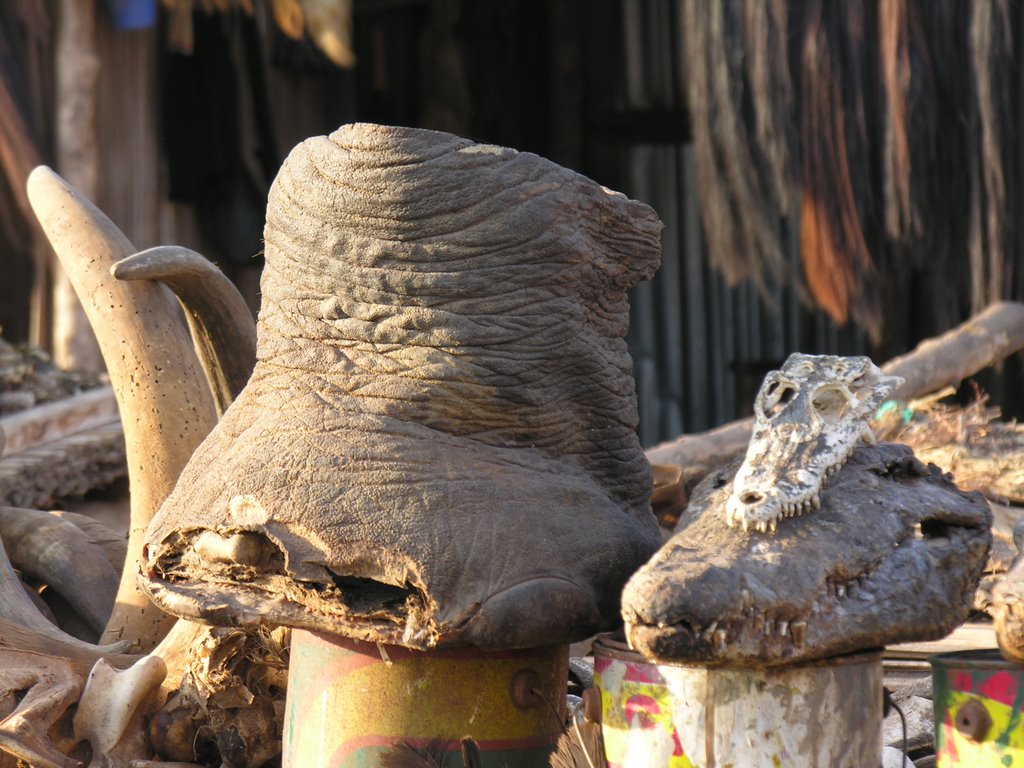
I don't mean to get down on traditional religions, because, I feel that western medicine is not the only way to go, but I just wish they wouldn't use endangered species. Like, a powder made from dried elephant foot to cure elephantitis? Plllease!
 Camelions

Whisks made out of the tails of I'm not sure what.

A horse head, among other things.

More horns than you could shake a horn at.
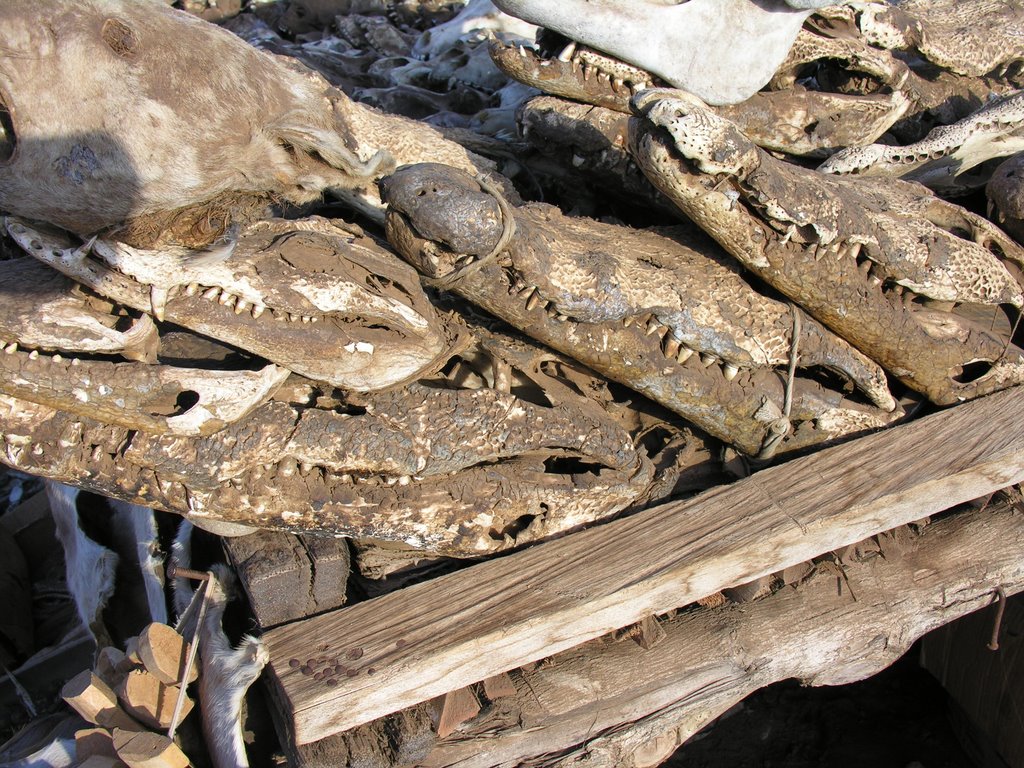
An assortment of Crocodillians, including a Gavial.
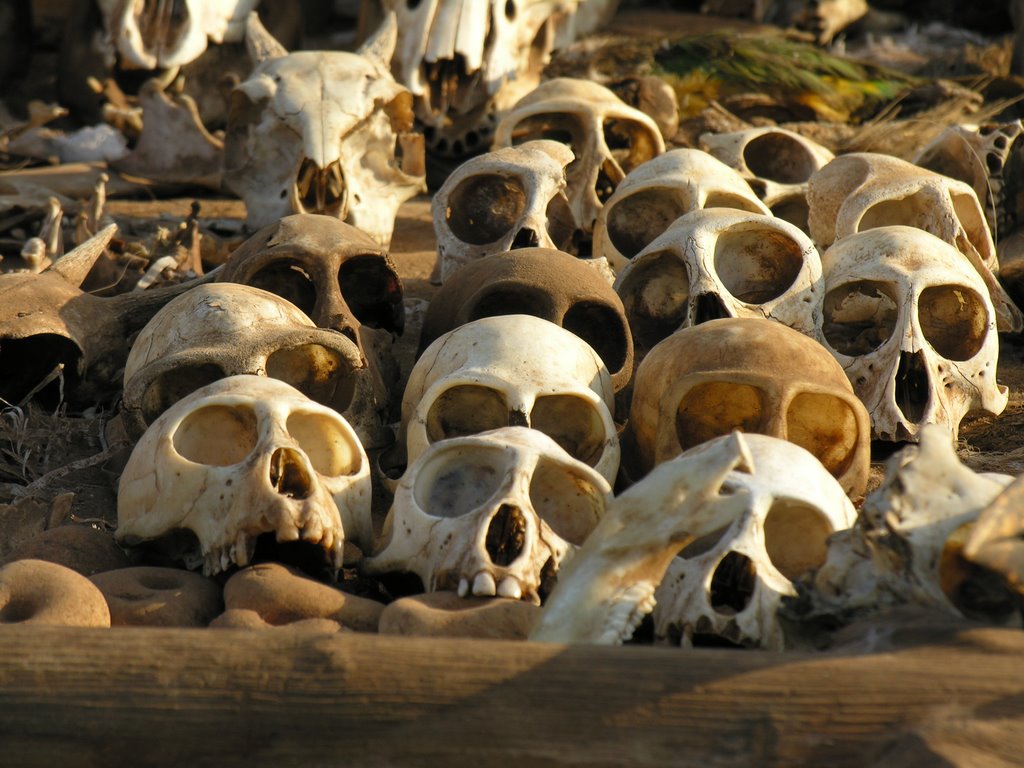
Assorted Primate skulls.
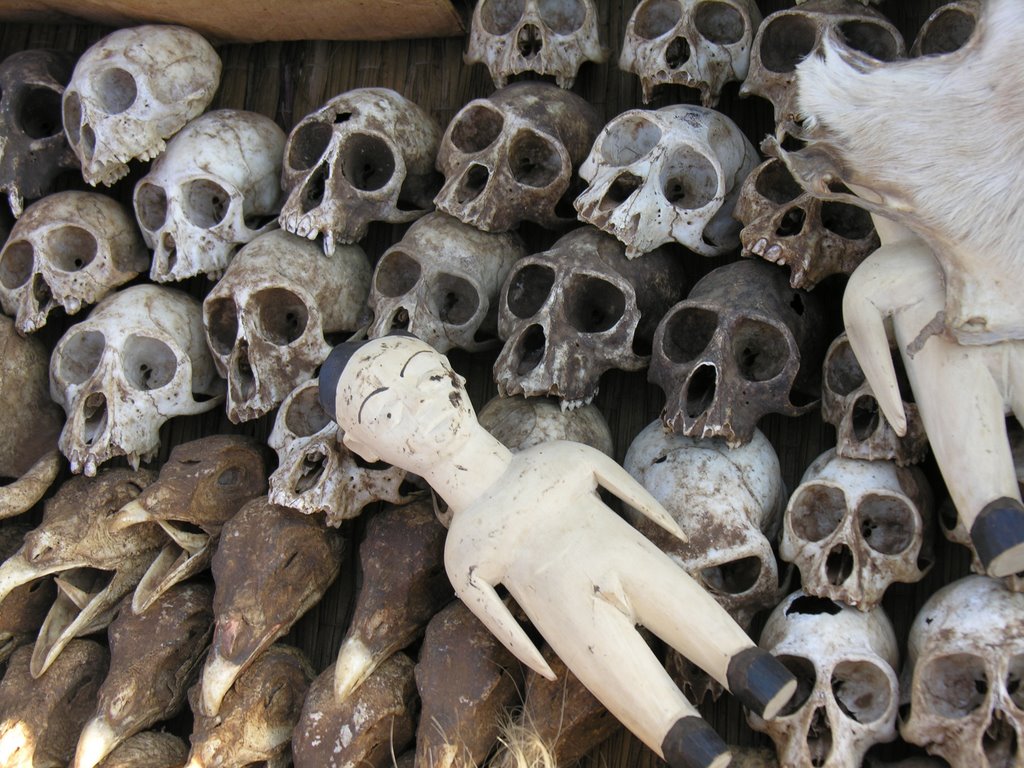
Primate skulls. and bird skulls with a fetish statue.

And a partridge in a pear tree! Or it's fetish market equivalent ... a dried out vulture.
That night we went out with some of K's peeps. We had a lovely pizza and some very large beers. I, very innapropriately, took the belly beads from the market guy out of my purse and showed everyone.








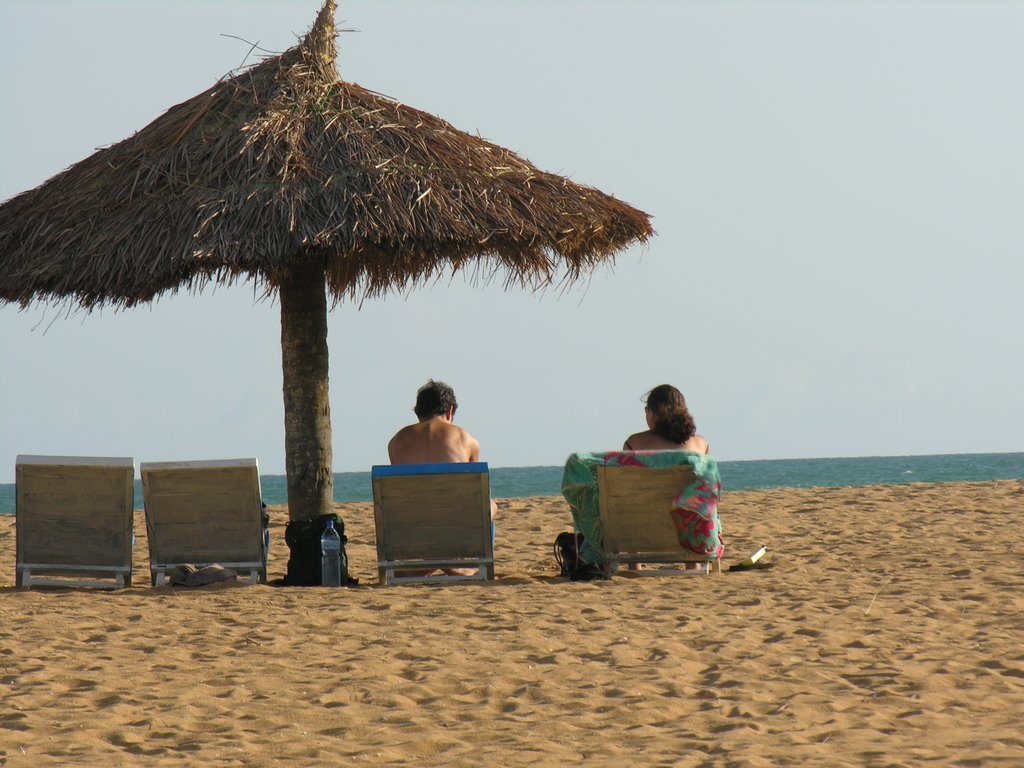
Africa - Day 4
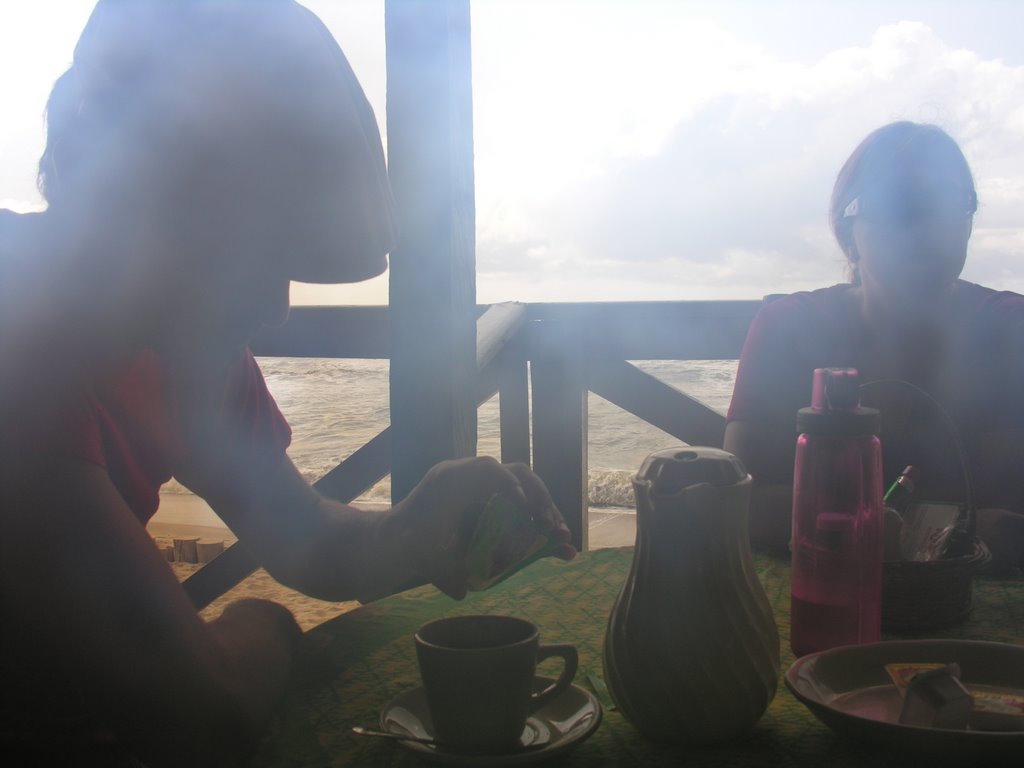 We woke up to a lovely breakfast and our first glimpse of the beauty of our sur- roundings.
 We laid on the beach for a little while, and had a little swim and then we got dressed and headed off down the beach to Anomabo town for a bite of lunch and to hire a car to take us to Cape Coast.

The walk down the beach was a bit of a surprise.  Once we got past the edge of the resort and closer into town we started to notice poop on the beach, the guide book warned of 'fresh turds' but I didn't really think we'd see any.
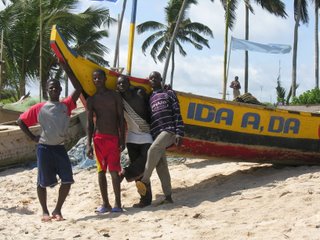
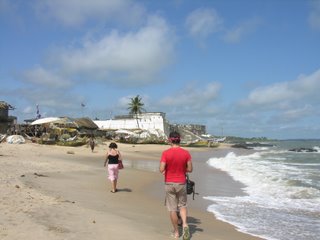 As we headed down the beach we saw vultures eating out of garbage piles, and lots of duggout fishing boats up close. I commented to the others that if my mother could see where I was she'd have a heart attack, then we all laughed our asses off.
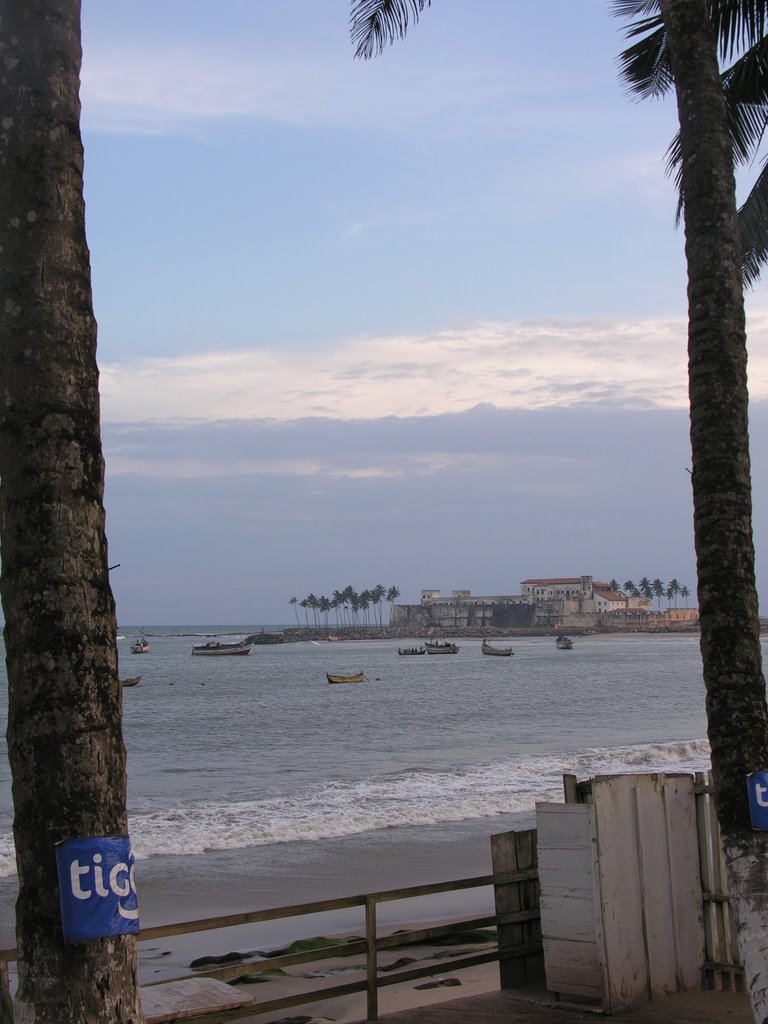
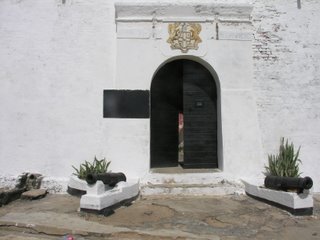 At the end of the beach was a big imposing building. It turns out it was another slave castle, called Fort William, and despite the fact that it's not open to the public, the door was ajar and we probably could have snuck a look around or found the caretaker and asked to take a look.
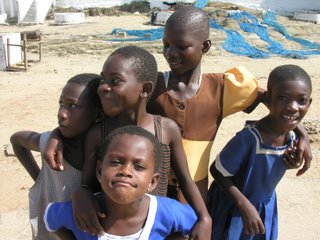 I'm still kicking myself that we didn't but I just didn't know.
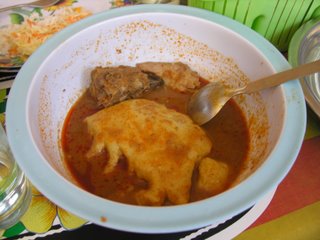
I had my first fufu in Anomabo, very tasty, the goat that came with it was a little too strong tasting for me, but I wouldn't rule out further goat eating in the future, K said that that particular goat was not very good.
After lunch we headed out to the main road, and tried to hire a car.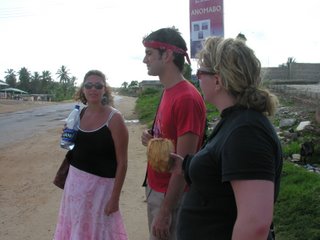 While we waited and waited for an empty car to go by, I noticed a little boy selling coconuts by the side of the road, so I decided that Ashley needed to try drinking coconut milk directly from the coconut, since we had nothing better to do. I pulled 1000 cedis out of my wallet and walked over to the kid. I asked him how much the coconut was, he said, 1000 cedis. A coconut doesn't cost 1000 cedis. So I pointed to a lady who had just bought one, and asked how much he charged her. I said that I wanted the price she had paid and not the price he charged white people. The little shit just smirked at me. I argued some more, but he just stood there smirking at me. Finally, I gave up and gave the little shit the 1000 cedis.
 Ash got to drink about half of her coconut before we got a car. She tossed the coconut in the ditch and nearby goat made a beeline for it. Later in the trip, I was still bitching about that little shit charging me so much when it really should have only cost like 300 cedis. K came in when we were talking about it and asked me how much I had paid. I told her and she said, 'that's 10 cents.' That put everything in perspective, but still, I could have bought 3 coconuts for what I paid, little shit.
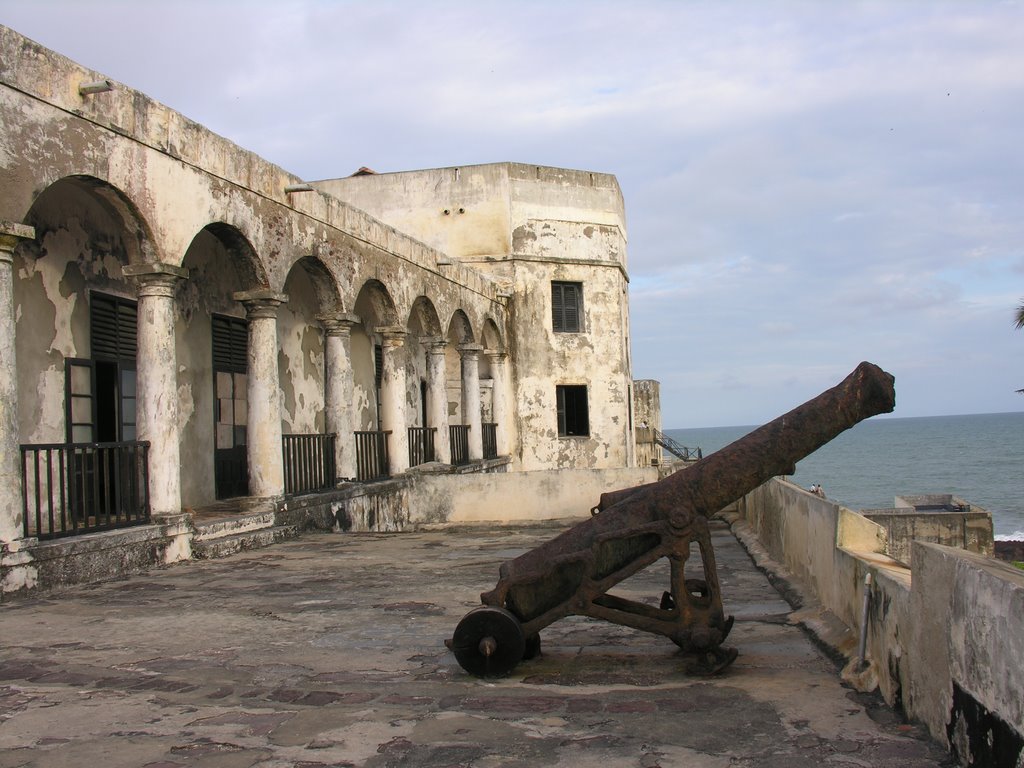
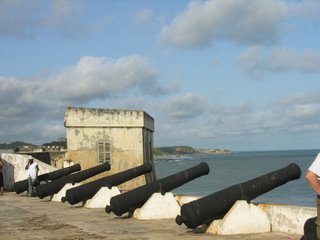
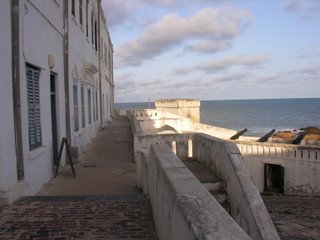 We headed for Cape Coast and had the driver drop us at Cape Castle the Unesco world heritage site, slave castle.
The slave castles were not what I expected at all. In some ways they were so normal seeming that you wouldn't really be all that effected by it, and then be freaked out that you weren't rolling on the ground and crying and tearing your hair out over it.
 Once we got past the edge of the resort and closer into town we started to notice poop on the beach, the guide book warned of 'fresh turds' but I didn't really think we'd see any.
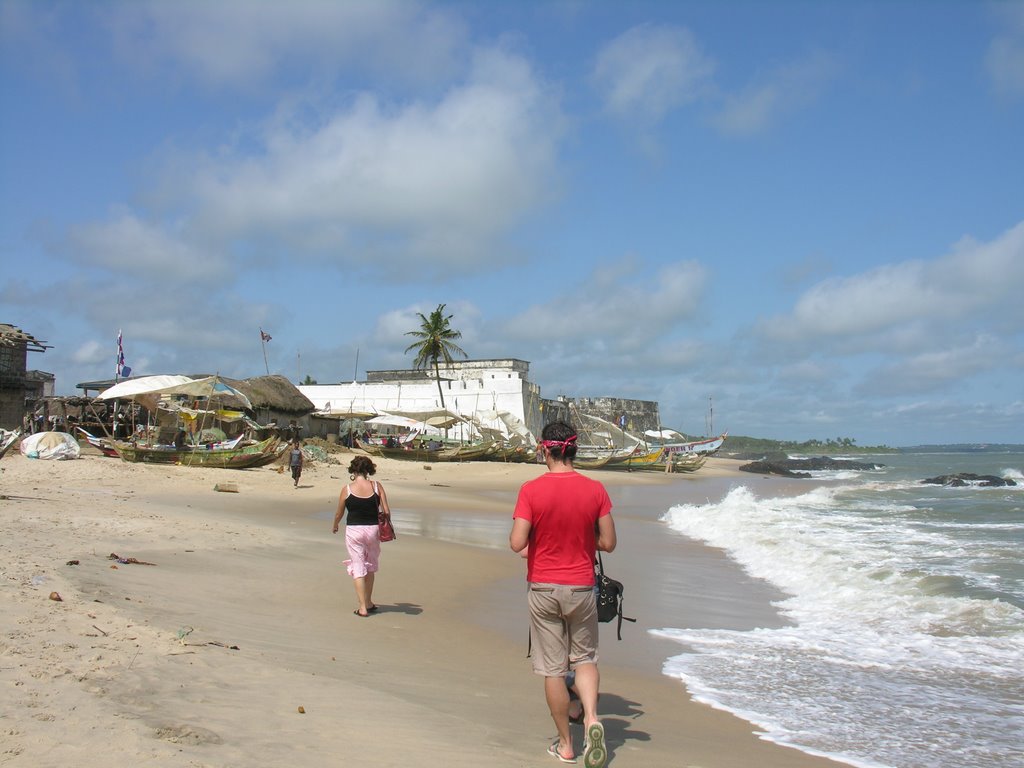 As we headed down the beach we saw vultures eating out of garbage piles, and lots of duggout fishing boats up close. I commented to the others that if my mother could see where I was she'd have a heart attack, then we all laughed our asses off.
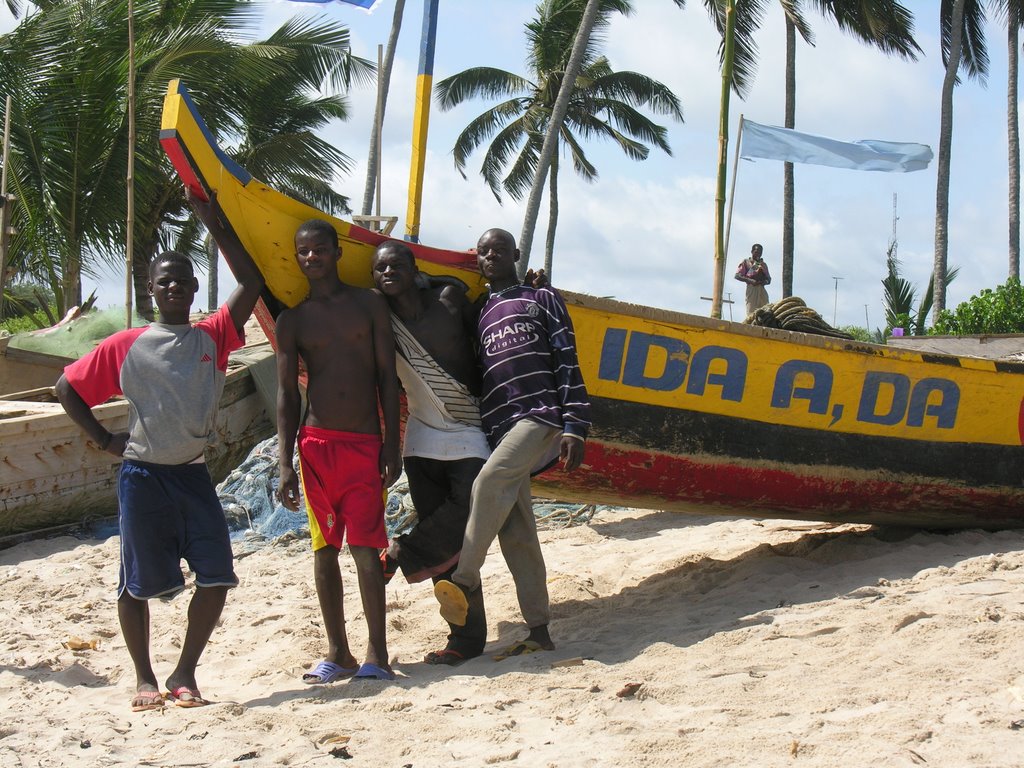
 At the end of the beach was a big imposing building. It turns out it was another slave castle, called Fort William, and despite the fact that it's not open to the public, the door was ajar and we probably could have snuck a look around or found the caretaker and asked to take a look.
 I'm still kicking myself that we didn't but I just didn't know.

I had my first fufu in Anomabo, very tasty, the goat that came with it was a little too strong tasting for me, but I wouldn't rule out further goat eating in the future, K said that that particular goat was not very good.
After lunch we headed out to the main road, and tried to hire a car.
 While we waited and waited for an empty car to go by, I noticed a little boy selling coconuts by the side of the road, so I decided that Ashley needed to try drinking coconut milk directly from the coconut, since we had nothing better to do. I pulled 1000 cedis out of my wallet and walked over to the kid. I asked him how much the coconut was, he said, 1000 cedis. A coconut doesn't cost 1000 cedis. So I pointed to a lady who had just bought one, and asked how much he charged her. I said that I wanted the price she had paid and not the price he charged white people. The little shit just smirked at me. I argued some more, but he just stood there smirking at me. Finally, I gave up and gave the little shit the 1000 cedis.
 Ash got to drink about half of her coconut before we got a car. She tossed the coconut in the ditch and nearby goat made a beeline for it. Later in the trip, I was still bitching about that little shit charging me so much when it really should have only cost like 300 cedis. K came in when we were talking about it and asked me how much I had paid. I told her and she said, 'that's 10 cents.' That put everything in perspective, but still, I could have bought 3 coconuts for what I paid, little shit.
 We headed for Cape Coast and had the driver drop us at Cape Castle the Unesco world heritage site, slave castle.
The slave castles were not what I expected at all. In some ways they were so normal seeming that you wouldn't really be all that effected by it, and then be freaked out that you weren't rolling on the ground and crying and tearing your hair out over it.
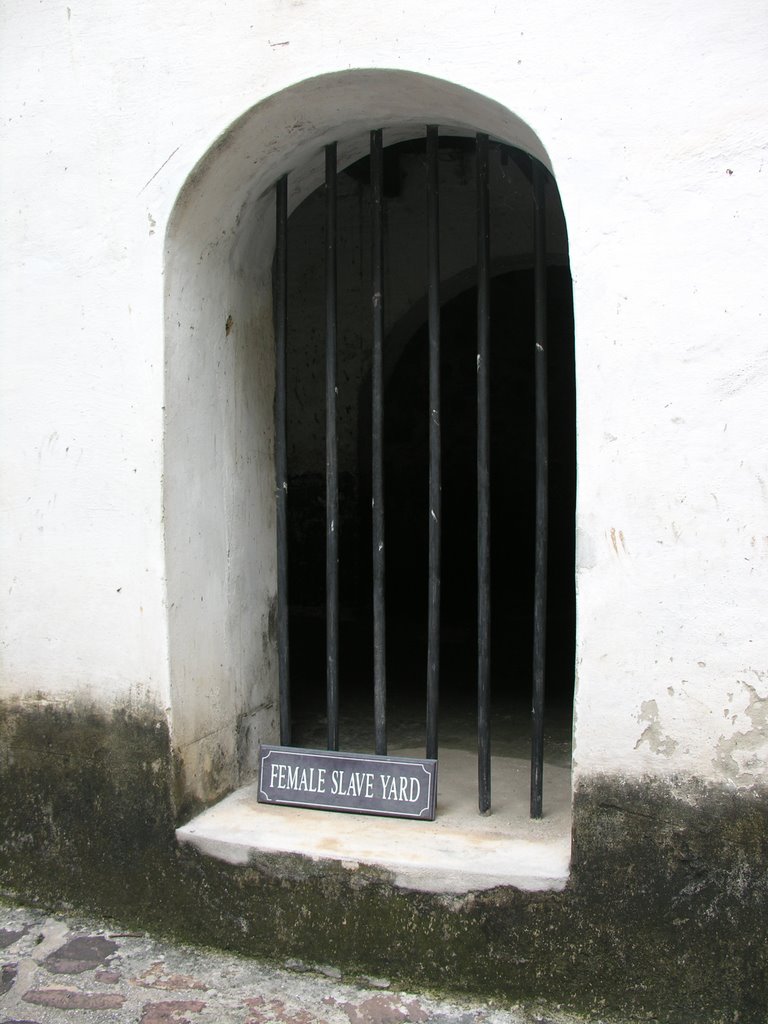
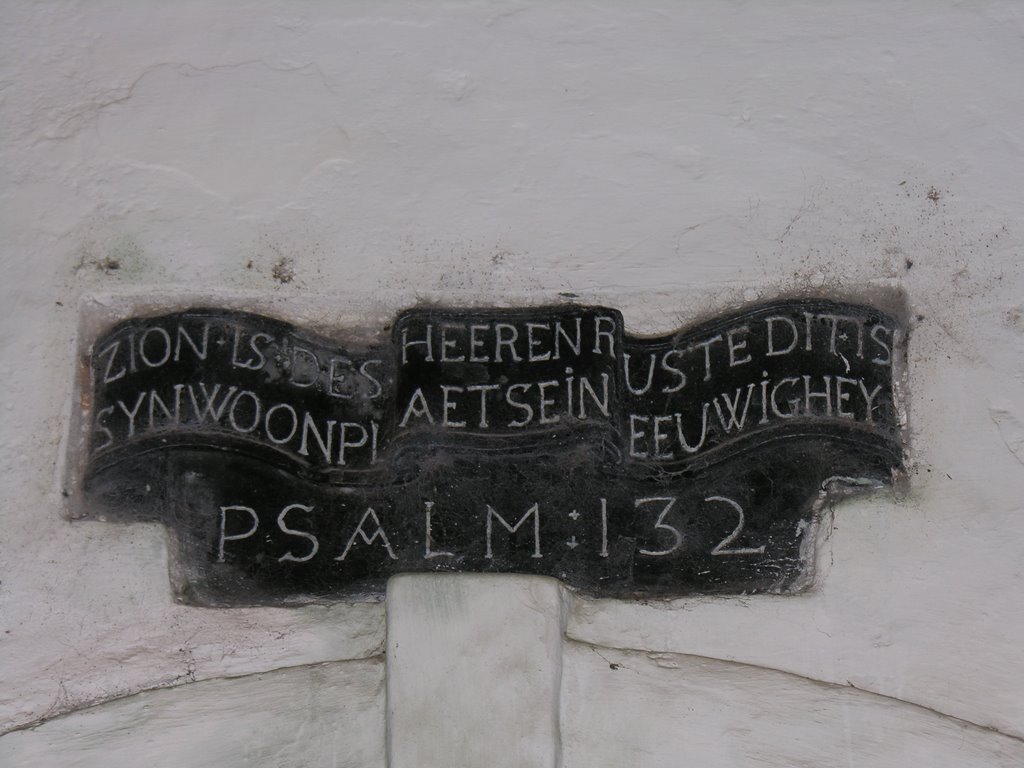
The thing is that the slave castles weren't just built to house slaves, in fact, slavery was just one aspect of the purpose of those buildings. All kinds of goods were brought from the interior and stored in the slave castles until ships could come and take them away to Europe or the new world, ivory, gold, lots of different types of goods. Also, all the colonial administration for the area was done from those castles, the governor lived there, with all his staff. 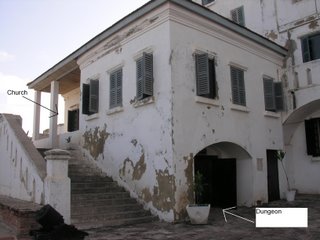 They had a school there, a church... in one case the church was over top of the slave dungeon. If that doesn't say something about organized religion, then I don't know what does. By the time the slaves got to the castle they'd have marched for as long as two months in shackles, with little to eat.
 The guards at the slave castles kept the near starvation of the slaves going, because the only way to keep them subdued was when they were weak.
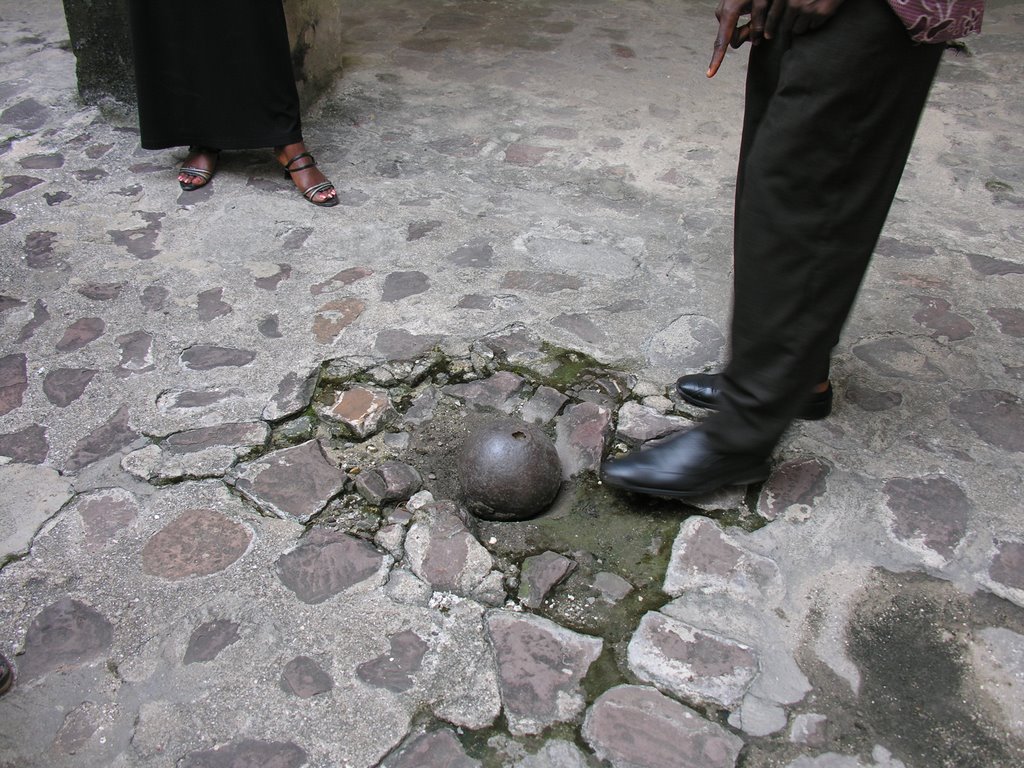
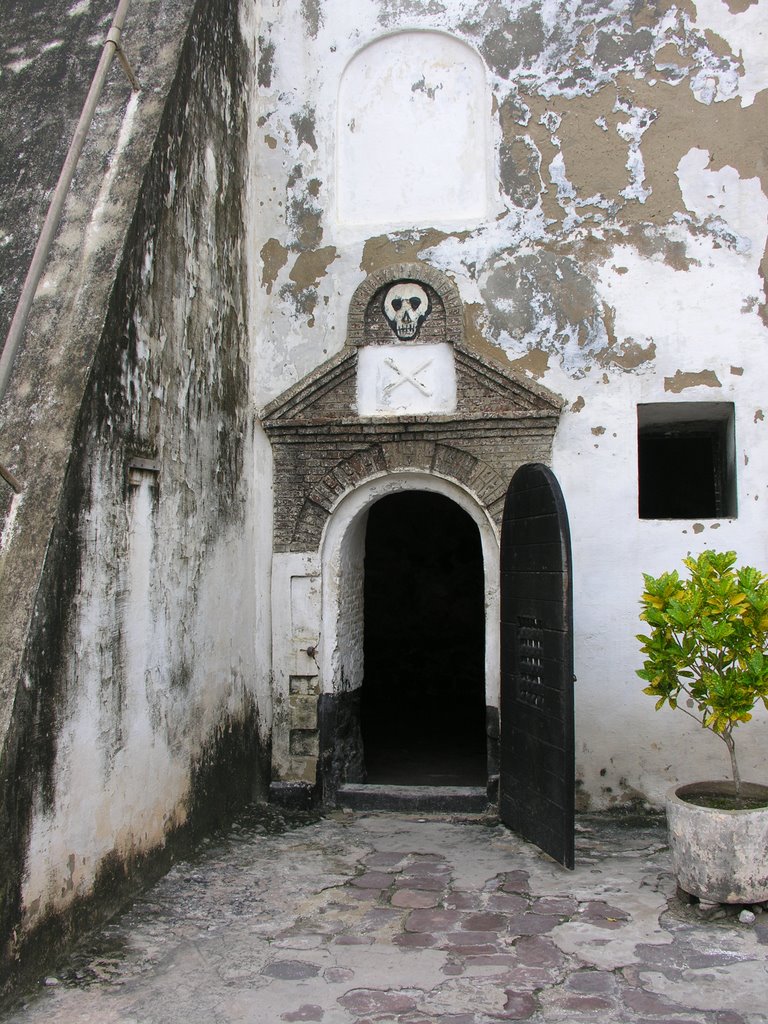
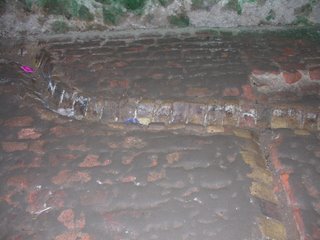 So, they gave them a meal a day. In Elmina the slaves had a bucket at either end of the small cells they were crowded into, whereas, in Cape Castle the floor was the toilet and you had to sleep in your own shit. In fact, our tour guide pointed out to us that the floors we stood on in the dungeon had been left exactly how they were when the last batch of slaves left. In the picture you can see the dirt and the drains built into the brick floor.
 The women of course had it worse than the men. The governor and his staff raped them. The guards would drag them all out of their cells, and the governor would pick one, and she'd be washed and given a meal and sent up to his room, if she resisted when she was up there, then she'd be chained outside and shamed. If she got pregnant, she'd get to have the baby and stay in Africa, and they'd send the kid to the school in the slave castle.
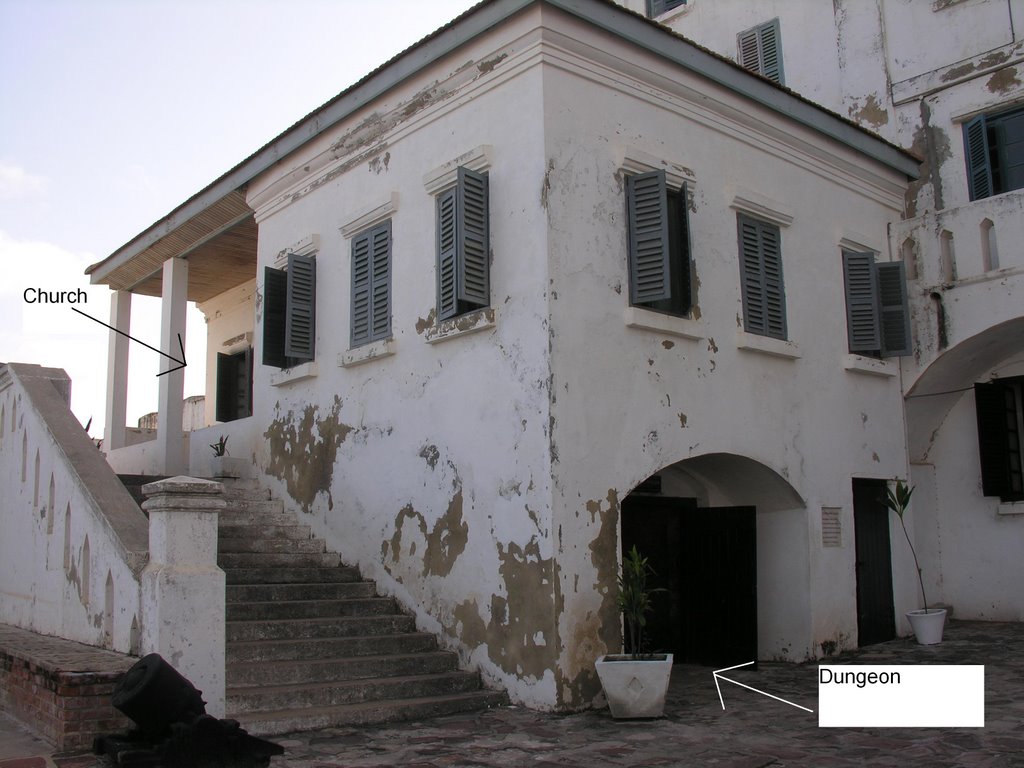 They had a school there, a church... in one case the church was over top of the slave dungeon. If that doesn't say something about organized religion, then I don't know what does. By the time the slaves got to the castle they'd have marched for as long as two months in shackles, with little to eat.
 The guards at the slave castles kept the near starvation of the slaves going, because the only way to keep them subdued was when they were weak.
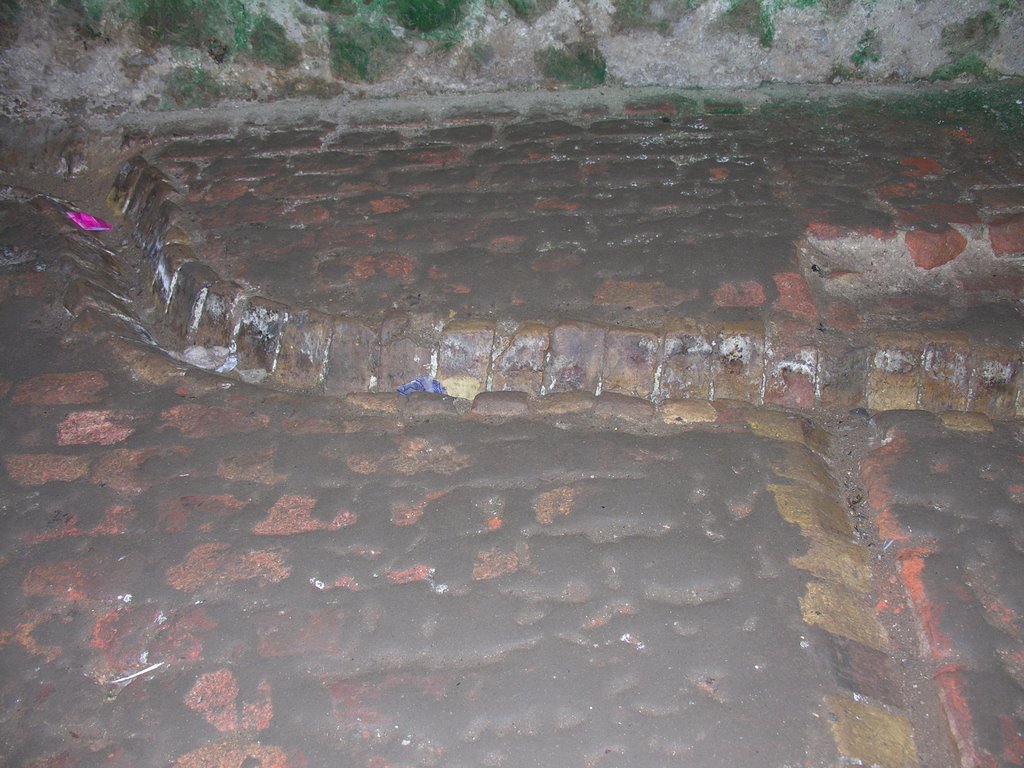 So, they gave them a meal a day. In Elmina the slaves had a bucket at either end of the small cells they were crowded into, whereas, in Cape Castle the floor was the toilet and you had to sleep in your own shit. In fact, our tour guide pointed out to us that the floors we stood on in the dungeon had been left exactly how they were when the last batch of slaves left. In the picture you can see the dirt and the drains built into the brick floor.
 The women of course had it worse than the men. The governor and his staff raped them. The guards would drag them all out of their cells, and the governor would pick one, and she'd be washed and given a meal and sent up to his room, if she resisted when she was up there, then she'd be chained outside and shamed. If she got pregnant, she'd get to have the baby and stay in Africa, and they'd send the kid to the school in the slave castle.
In some cases the slaves committed suicide.  When they were being taken out of the 'door of no return' to the slave ships, often one of them would jump in the water and drown himself. Since they were all chained together, sometimes this killed people who were going to take their chances on the boat as well. It's not surprising they would do this, since many of them thought that they were being put on the ships to be food for the crews during the voyage, a logical conclusion if your jailers didn't bother to learn your language.
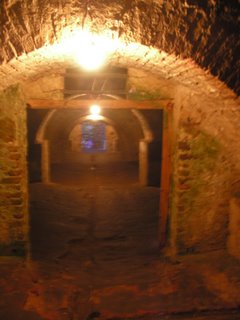
 When they were being taken out of the 'door of no return' to the slave ships, often one of them would jump in the water and drown himself. Since they were all chained together, sometimes this killed people who were going to take their chances on the boat as well. It's not surprising they would do this, since many of them thought that they were being put on the ships to be food for the crews during the voyage, a logical conclusion if your jailers didn't bother to learn your language.

The weird thing about it all is that it's in Africa, presented by Africans, who have a much more unemotional view of the slave trade than Americans do. So when we went to the civil rights museum and had an American black presentation on slavery and the civil rights movement, the emotion is conveyed even if the words are the same, but you totally don't get that from the African tour guide.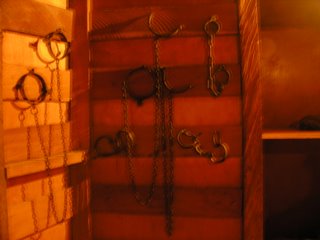 Obviously, you can't tell those kinds of stories without some emotion, but that extra emotion that an American would give to it, just isn't there. In fact, having studied this a lot already, I really wasn't feeling it, till I saw the wreaths that had been sent by different African American groups to be laid at the 'door of no return' at the slave castles.
 Obviously, you can't tell those kinds of stories without some emotion, but that extra emotion that an American would give to it, just isn't there. In fact, having studied this a lot already, I really wasn't feeling it, till I saw the wreaths that had been sent by different African American groups to be laid at the 'door of no return' at the slave castles.
There are lots of these buildings along the coast, most of the larger towns have them. Not all of them are open to the public.  After colonialism ended, the new governments took over these buildings and continued to use them as administrative buildings, and jails, just as they had in colonial times, in fact, many of them are still jails today. Cape Castle was both a jail and open to tourists at the same time for many years.
 It opened to tourists in the 1970s and the jail didn't close until 1993 when they were having a visit from some important African Americans and the African Americans pointed out that the symbolism of jailing Africans in these buildings was just wrong. So the government shut the jail down and moved the prisoners elsewhere. The area where the jail was between the 70s and the 90s is now a cluster of shops. But many of these buildings are still jails. I wonder how much better the conditions are in there now, than they were in the 1700s and 1800s.
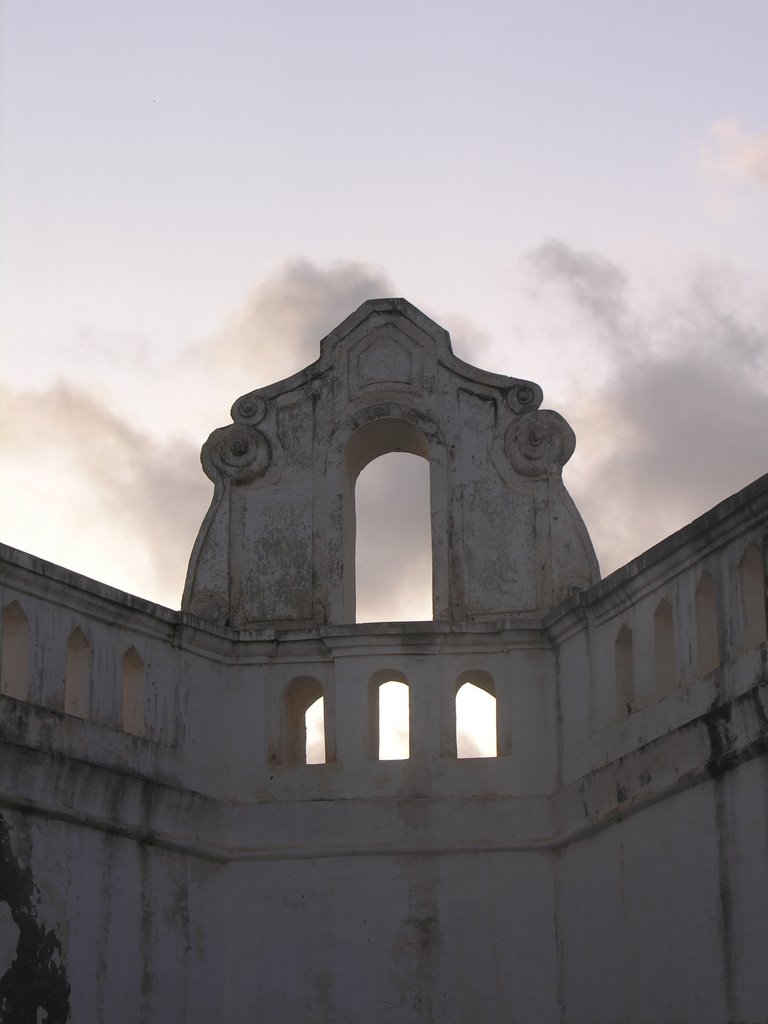
After the tour we headed into the museum which was very slick, probably a result of the Unesco money they got from being a world heritage site.
After that we wandered into the former prison and looked in the shops, we saw the local dance troup practicing, which I videoed. And, while I waited for Dan and Ashley and K to finish shopping, I found two guys playing this game that they all love in West Africa. I took a video of that too. The guy in the darker shirt wins, but I'm not sure why.
Subscribe to:
Posts (Atom)